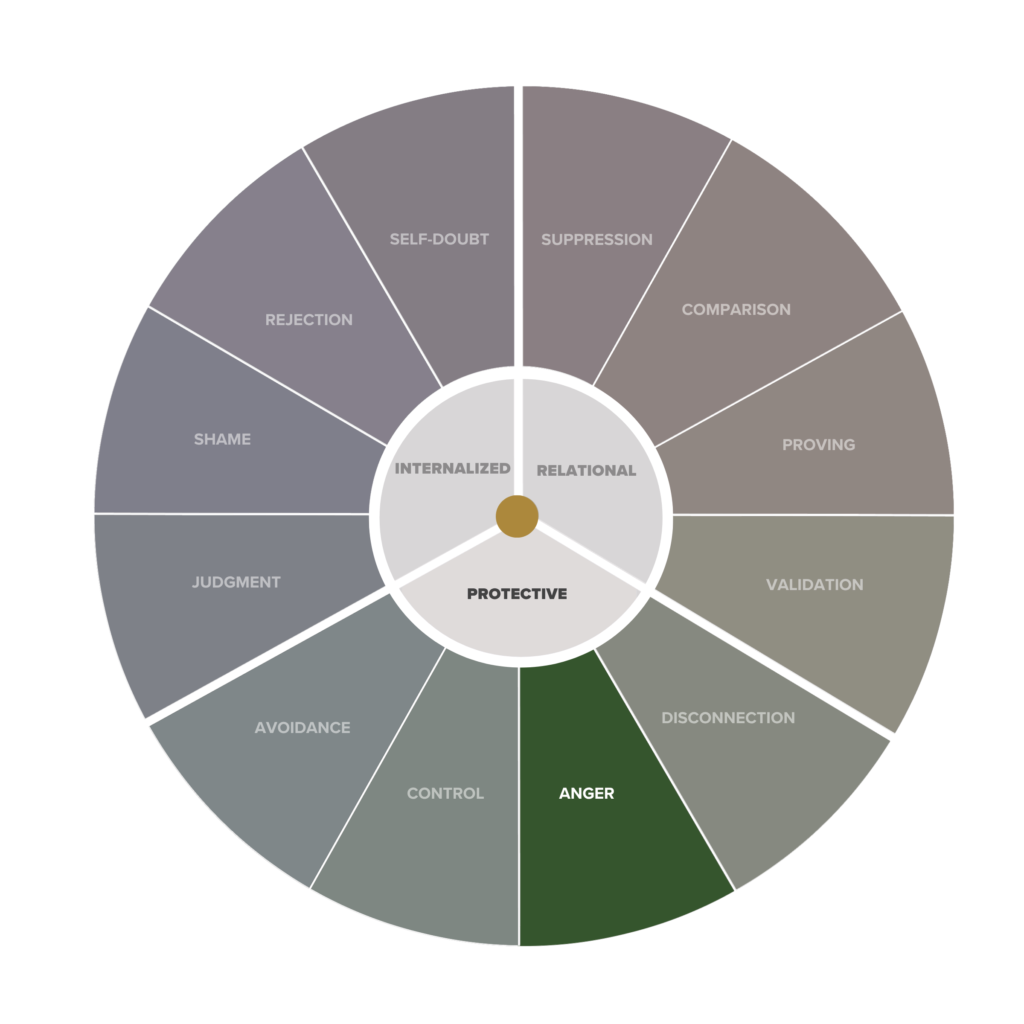
Pressure Transmutation for B2B Revenue Leaders

The Anger Pattern: Transmuting Intense Frustration into Structural Solutions

The Anger Pattern manifests as rapid frustration, a sharp communication edge, and annoyance when teams or systems fail to execute at your level. When disengaged from these survival responses, the raw material of Anger transmutes into your greatest leadership asset: Catalytic Clarity.
The Anger Pattern in B2B Revenue Leadership | The Pressure Pattern Map | LarissaNicole.com

Continue Reading

The Visible Behavior

When Devotion to Excellence Burns Relational Capital

Under acute pressure, your reactive response is a rising irritation over missed details, sharp pushback during meetings, and an aggressive posture that leaves teams walking on eggshells. In daily leadership, the Anger Pattern expresses itself as:

The Shadow Origin

Your Fire Is Not a Character Defect

You are not reacting with anger because you are innately hostile. The Anger Pattern formed in environments where poor standards, betrayal, or systemic failure resulted in severe personal loss, leaving you feeling unprotected. Your nervous system learned a core survival rule: If I bring intense heat and assert immediate control, I protect myself and my environment from ruin.

Beneath this sharp defense lives a rare, high-potency executive gift:

The shadow is not your passion for quality. It is that this catalytic energy has been hijacked by the need to protect yourself from the grief of unappreciated effort.

The Transmutation Alchemy

From Reactive Frustration to Catalytic Clarity

Integration does not mean becoming passive, suppressing your drive, or accepting poor performance. It means detaching your passion from frustration so it becomes Catalytic Clarity & Infectious Inspiration.

The Unintegrated Pattern (Defensive State)

The Integrated Asset (Grounded Authority)

Reactive Frustration: Venting your irritation at teams when execution drops or targets miss.
Catalytic Clarity: Channeling your intensity into precise, calm structural adjustments that fix the root issue.
Combative Response: Defending your strategy with intense heat during board or CEO reviews.
Unshakeable Executive Presence: Delivering direct truth with composure, commanding respect without hostility.
Leading Through Fear: Forcing short-term output by making people afraid to fail.
Infectious Inspiration: Setting elite standards that inspire ownership while maintaining psychological safety.
Defensive State

The Unintegrated Pattern

Grounded Authority

The Integrated Asset

Discovery Signals

Is the Anger Pattern Active Right Now?

A few key indicators:

Reclaiming Your Authority

Real-Time Somatic Intercept for Anger

When you notice frustration rising, run your execution through the 4-step Real-Time Intercept Model:

1. Translate The Business Pressure

State the raw operational reality.(e.g., “The SDR team missed their qualified lead goal by 35% for the second consecutive month.“)

2. Identify The Default Pattern

Pinpoint the internal pressure state that’s driving your reaction. (e.g., “I feel resentment that I am carrying the burden of revenue while the team isn’t stepping up.“)

3. Interrupt The Distortion

Diffuse your response pattern by discharging your frustration before entering the room. Acknowledge that a structural pipeline failure is not a personal betrayal.

4. Re-anchor THe Decision

Reclaim your executive authority. (e.g., Address SDR leadership directly and calmly: “The 35% miss is a structural issue. Let’s investigate the lead routing and rep activity metrics right now so we can resolve this going forward.“)

Next Steps

Transmute Your Pattern into Performance

If you are ready to detach your passion from executive survival mode and build an engine that operates with true momentum:

Decision Velocity Session

A 90-minute private executive intensive for a single high-stakes revenue decision, GTM pressure point, or stakeholder conversation.

Decision Velocity Advisory

A 3-month private advisory for senior B2B revenue leaders navigating high-stakes growth pressure, decision latency, and stakeholder volatility.

Other Patterns

Three Domains of Executive Transmutation

These twelve Pressure Patterns represent the responses that surface when growth stagnates, board oversight intensifies, or organizational complexity spikes. The patterns map across three distinct operational domains:

Relational Patterns

Authority & External Perception

Internalized Patterns

Self-Worth & Executive Standards

Protective Patterns

Strategic Defenses & Execution